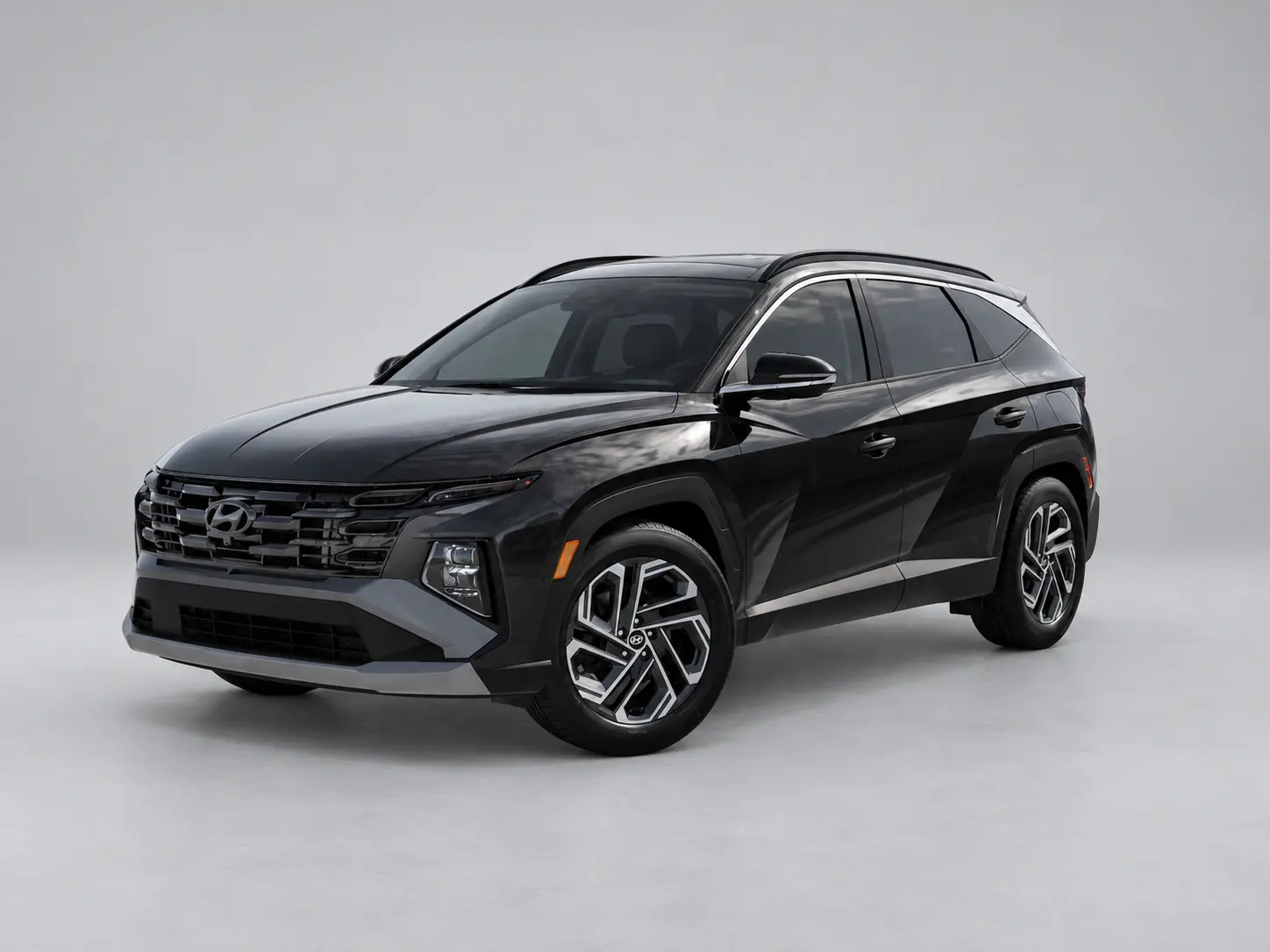
Why choose the Hyundai Tucson over the Volkswagen Tiguan?
A compact SUV still has to handle a full week: passengers, groceries, sports equipment and the occasional larger load. The Tucson makes its case with generous published cargo space, a separate hybrid option and longer new-vehicle warranty coverage. Compare those priorities with the Tiguan’s turbocharged performance and display choices.1,3,4,5,6
5 years / 60,000 milesNew Vehicle Limited Warranty.*4
Consider the Tucson
Four practical reasons to consider the Tucson.
Think about what the vehicle carries and how you plan to own it, then compare the trim that meets those needs.
01 / Cargo flexibility
Make space for the larger load.
Gas Tucson publishes 74.8 cubic feet of SAE cargo volume with the rear seats folded; Volkswagen lists 69.8 for Tiguan. Bring your usual equipment when you compare these SUVs. The opening shape and the items you carry matter alongside the published volume.1,3
02 / Powertrain choice
Put a hybrid on your shortlist.
Hyundai offers a separate 2026 Tucson Hybrid alongside the gas Tucson. Volkswagen’s U.S. 2027 Tiguan lineup uses turbocharged gas engines. If a hybrid is part of your plan, Tucson supplies that option. Check its own specifications; the gas-model figures here are not interchangeable.3,6
03 / Passenger comfort
Try the second row before you decide.
Tucson provides 41.3 inches of published rear legroom and a standard 12.3-inch touchscreen. Those are useful starting points for a family vehicle, but screen size alone should not decide the purchase: the 2027 Tiguan offers a standard 12.9-inch display and an available 15-inch upgrade. Sit behind your own driving position and try the controls in each.1,3
04 / Ownership
Compare the coverage by years and miles.
Hyundai’s New Vehicle Limited Warranty lasts 5 years or 60,000 miles, versus Volkswagen’s 4 years or 50,000 miles. Hyundai also provides original owners a 10-year/100,000-mile Powertrain Limited Warranty. For someone planning to keep a new Tucson, those published terms deserve a place in the decision alongside equipment and driving feel.*4,5
Compare the details
Cargo, equipment and coverage at a glance.
U.S. 2026 gas Tucson versus the U.S. 2027 Tiguan. Hybrid availability is shown separately; hybrid specifications are not substituted for gas-model figures.
Swipe the table to compare both vehicles.
Manufacturer-published specifications. Equipment varies by model year, trim and powertrain.
*Time or mileage limit, whichever comes first, where applicable. Limitations and exclusions apply. Hyundai’s 10-year/100,000-mile powertrain coverage applies to the original owner; subsequent owners receive remaining applicable 5-year/60,000-mile New Vehicle Limited Warranty coverage. Roadside assistance is a separate benefit, not repair coverage.4,5
This table uses Hyundai’s 74.8-cu.-ft. SAE gas-Tucson measurement, not its larger alternative maximum. Manufacturer measurement methods and cargo shapes can differ.1,3
Your next step, at Weimer
Experience the Tucson in Morgantown.
For Morgantown and Fairmont shoppers, a useful Tucson visit starts with your normal load. Bring the stroller, golf bag or other bulky item you use most, then check the space with the second row upright and folded.
Set the driver’s seat first, have another adult sit behind it, and try the infotainment controls while parked. Compare the specific gas or hybrid trim you would actually choose.
The comparison uses the 2026 Tucson and the 2027 Tiguan currently described on Volkswagen’s U.S. website. Each column identifies the year. Check that the model year and trim of a vehicle you shop match the equipment you expect.2,3
Does the Tucson have more cargo space than the Tiguan?
The published rear-seats-folded figures shown here are 74.8 cubic feet for gas Tucson using Hyundai’s SAE measurement and 69.8 for Tiguan. These figures describe volume, not the exact size of an item that will fit. Check opening width, floor length and seat position with your own cargo.1,3
Is the Tucson Hybrid included in the gas-model numbers?
No. Tucson Hybrid is a separate option with its own powertrain, equipment and specifications. The cargo and horsepower figures in this table describe the gas Tucson; the hybrid row simply confirms that Hyundai offers another powertrain choice.1,6
Keep comparing
More Tucson comparisons.
Sources & comparison notes
U.S. 2026 Hyundai Tucson and 2027 Volkswagen Tiguan information checked November 15, 2026. Gas-model specifications unless expressly stated otherwise. Equipment varies by trim. The comparison uses Hyundai SAE cargo volume; it is not an independent cargo test.