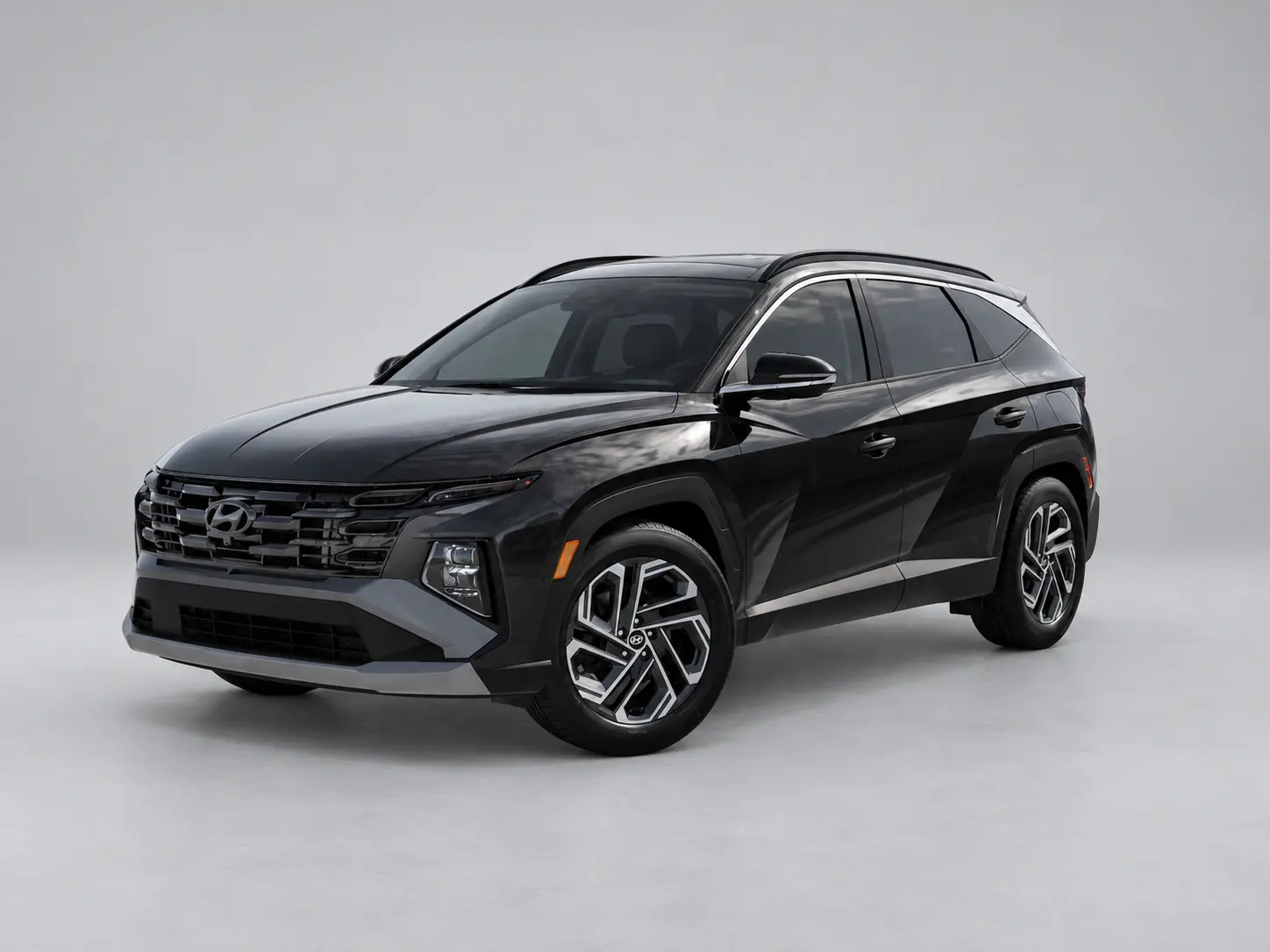
Why choose the Hyundai Tucson over the Toyota RAV4?
A compact SUV still needs to work for the people in the back seat. The Tucson makes a strong case with more published rear legroom, a larger standard center touchscreen and longer basic and original-owner powertrain warranty coverage. The right powertrain remains part of the decision.1,2,3,4
5 years / 60,000 milesNew Vehicle Limited Warranty.*3
Consider the Tucson
Four reasons to put Tucson on your list.
Start with the details you will use on an ordinary day: where everyone sits, how the controls feel and which engine you actually want.
01 / Rear-seat space
Give the back seat more room.
The gas Tucson lists 41.3 inches of rear legroom against 37.8 inches in RAV4. That is a 3.5-inch difference in published measurements. If adults or growing children regularly ride behind you, set the driver’s seat first, then try the rear seat yourself.1,2
02 / Standard technology
Start with a bigger screen.
Every gas Tucson trim includes a 12.3-inch center touchscreen. The RAV4 LE starts with a 10.5-inch screen. This is a standard-equipment advantage; Toyota also offers a larger 12.9-inch screen on selected configurations. Compare the trims you would actually buy.1,2
03 / Powertrain choice
Keep a conventional gas option.
If you prefer a gas-only SUV, Tucson offers a 2.5-liter engine and an eight-speed automatic. Tucson Hybrid is another choice. The redesigned 2026 RAV4 lineup is hybrid or plug-in hybrid only, so it no longer offers the gas-only configuration some shoppers remember.1,2,5
04 / Ownership coverage
Look beyond the first few years.
Hyundai provides 5-year/60,000-mile new vehicle coverage and 10-year/100,000-mile powertrain coverage for the original owner. Toyota’s corresponding basic and powertrain warranties are 3 years/36,000 miles and 5 years/60,000 miles. Those longer Hyundai periods are worth considering if you plan to keep your vehicle.*3,4
Compare the details
The compact SUV details, clearly compared.
U.S. 2026 gas Tucson versus 2026 RAV4 Hybrid. Hybrid Tucson and RAV4 Plug-in Hybrid figures are excluded unless specifically identified.
Swipe the table to compare both vehicles.
Manufacturer-published specifications. Equipment varies by model year, trim and powertrain.
Warranty periods end at the stated time or mileage, whichever comes first. Limitations and exclusions apply. Hyundai’s 10-year/100,000-mile Powertrain Limited Warranty is for the original owner; subsequent owners receive remaining applicable 5-year/60,000-mile New Vehicle Limited Warranty coverage. Commercial-use exclusions apply. These comparisons concern basic/new vehicle and powertrain coverage, not every warranty category. See the manufacturers’ complete terms.3,4
Cargo figures are manufacturer-published volumes, not a guaranteed loading advantage. Hyundai separates SAE and maximum measurements; Toyota’s cited guide does not identify its measurement method. We show Tucson’s lower SAE figure and do not calculate a cargo advantage across those methods. Test your own luggage or equipment.1,2
Your next step, at Weimer
Experience the Tucson in Morgantown.
For shoppers in Morgantown, Fairmont and Bridgeport, a useful first step is choosing gas or hybrid, then checking the exact Tucson trim. That keeps an attractive feature on a different version from steering your decision.
Bring the people and bags that normally travel with you. Set both front seats for their usual occupants, check rear knee room and try your phone with the center screen before the test drive.
No. Toyota’s U.S. 2026 lineup uses Hybrid and Plug-in Hybrid powertrains. Tucson still offers a conventional gas engine as well as a hybrid. A comparison using the older RAV4 gas engine would not describe the redesigned 2026 model.1,2,5
Does Tucson always have the larger touchscreen?
No. Tucson’s 12.3-inch screen is larger than the RAV4 LE’s standard 10.5-inch screen. A RAV4 equipped with Toyota’s available 12.9-inch screen is larger. The table compares starting equipment, not every possible option.1,2
Why does Tucson have two published cargo figures?
Hyundai lists both maximum and SAE cargo measurements: 80.3 and 74.8 cubic feet with the rear seats folded. The table uses the SAE figure and identifies the Toyota source separately so different measurement conventions do not become an exaggerated capacity claim.1,2
Keep comparing
More Tucson comparisons.
Sources & comparison notes
U.S. 2026 information checked November 15, 2026. The 3.5-inch legroom difference is calculated from published specifications. Cargo methods are identified above. This page does not compare RAV4 Plug-in Hybrid performance or every battery warranty.